
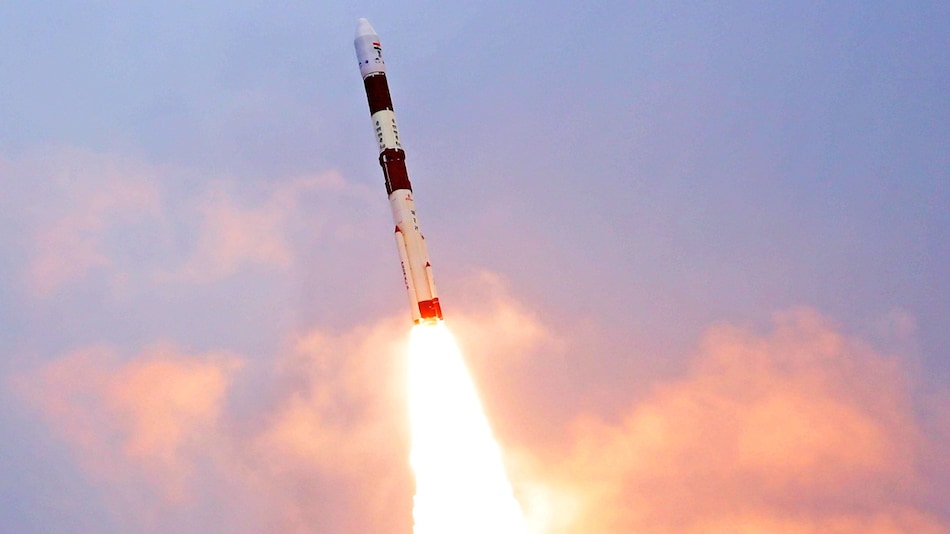
ISRO History at a Glimpse: From Carrying Rocket elements on Bicycle to Aiming for Mars among vi Decades India's house analysis began within the Nineteen Twenties once several experiments were conducted to grasp radio waves and also the part till the Nineteen Forties From carrying elements of the primary rocket on a bicycle to finding water on the Moon, the Indian house analysis Organisation (ISRO) has returned an extended approach since its origin and has been pioneering house missions with tireless zeal. Following its unbelievable success over the years, it's worthy to conjointly celebrate its journey, its challenges, and its determination to beat them. A Twitter thread has currently fantastically captured the highlights of ISRO and India's six-decade flight to triumph. Posted by Bengaluru-based bourgeois Palak Zatakia, the thread — comprising thirty-five tweets — lays out the “story of ISRO.” Zatakia says ISRO's biggest accomplishment is that it galvanized generations to “dream larger and aim higher.”

The starting According to Zatakia, India's house analysis began within the Nineteen Twenties with academic S K Mitra, World Health Organization together with his team conducted a variety of experiments to grasp radio waves and also the part till the Nineteen Forties. This triggered Associate in Nursing interest in house analysis and researchers began coordinating. In 1945, Dr. Homi J Bhabha established the Tata Institute of basic analysis (TIFR). 2 years later, Dr. Vikram Sarabhai came upon a Physical work in Ahmedabad. And in 1954, the Department of energy (DoAE) was supported to guide the funding for atomic and house analysis in Bharat.

But in 1957, once the then land launched the world's 1st satellite, named orbiter, Indian scientists realized the requirement to pace up and so Prime Minister Nehru asked DoAE to require over the responsibilities of house analysis. Meanwhile, Dr. Sarabhai had begun putting in place the Indian National Committee for house analysis. The middle years and also the 1st launch In 1962, INCOSPAR was born with facilitate from Dr. Bhabha. The new organization took over the house analysis responsibilities from DoAE. Dr. APJ Abdul Kalam, World Health Organization later became the President of Bharat, was one of the primary members of INCOSPAR. INCOSPAR then began getting ready to launch India's 1st rocket from Thumba, a rural pocket in Kerala. however, Thumba had neither the platform nor analysis facilities to create the launch doable. therefore scientists born-again a church into their workshop and also the Bishop's house into their workplace. there have been different supplying challenges: the new base failed to have canteens. Scientists had to cycle to Thiruvananthapuram terminal a day for breakfast and dinner. and a few rocket elements had to be transported to the platform on bicycles. On Nov twenty-one, 1963, Bharat with success launched its first-ever rocket. and 6 years later, on India's twenty-second Independence Day, ISRO was shaped out of INCOSPAR. In 1972, ISRO became a district of the fresh-shaped Department of house. Then in 1980, ISRO with success deployed Rohini RS-1 employing a Satellite Launch Vehicle (SLV-3). Dr. Kalam was the project director of SLV-3. The shaping image A year later, ISRO needed to launch an Associate in Nursing experimental communication satellite – named APPLE. however, the satellite antenna had to be tested beneath a thermal blanket and ISRO failed to have the power to try to do that at the time. APPLE was then placed on a bullock cart to produce a non-magnetic atmosphere and take a look at the antennas in an exceeding field. It is this incident that became the shaping image of the first years of ISRO and also the challenges it Janus-faced. APPLE was with success launched on Gregorian calendar month nineteen, 1981, from Kourou, French Guiana. In 1994, ISRO with success launched its 1st Polar Satellite Launch Vehicle (PSLV) mission. The PSLV later became the selection for Chandrayaan-1 and Mangalyaan missions. Zatakia gave a stimulating snipping that happened in 2004. ISRO's team met then-President Dr. Kalam to debate India's 1st satellite mission geared toward orbiting the Moon. however, Dr. Kalam suggested, “Why not land on the Moon instead of merely orbiting it?” Four years later, Chandrayaan-1 was launched to land on the Moon. In Nov 2008, Chandrayaan-1 discovered water on the Moon, giving an enormous boost to ISRO and India's position in house analysis. Bharat conjointly became the fourth country to position its flag badge on the Moon. “A historic year for Bharat and ISRO!” aforementioned Zatakia.

In 2013, ISRO with success launched the Mangalyaan Mission (MOM). On September twenty-four successive year, once Mangalyaan entered the orbit of Mars, Bharat became {the 1st|the primary} country within the world to try to to therefore within the terribly first try. In 2017, ISRO stone-broke records by launching 104 satellites on one rocket. The future ISRO has proclaimed it's getting to launch India's third satellite mission — Chandrayaan-3 — someday in 2021. Its plans embrace manned mission ‘Gaganyaan' by 2022, a follow-up of the Mangalyaan by 2024, and build an area station as a follow-up of the Gaganyaan mission.

Every project or new launch by the organization ne'er fails to draw in the public interest, whereas the spectacular successes inspire generations. really a desirable journey, isn't it?